
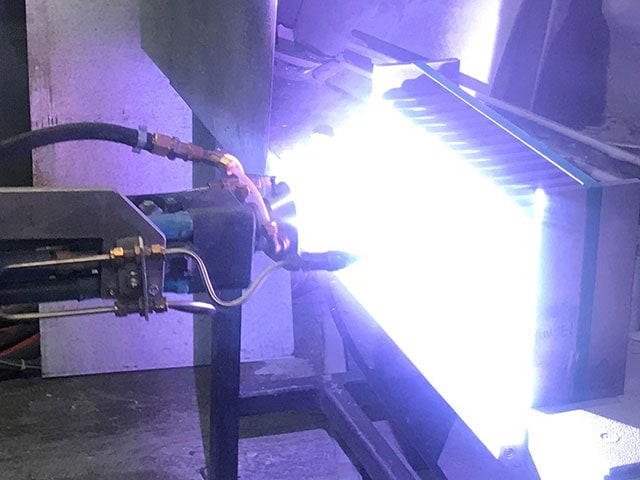
As metal spray/thermal spray coatings are typically pure metallics with no binders, they are very well suited to applications in the electrical and electronic industry. Conductive alloys such as copper, zinc, tin-zinc, babbitt and Aluminium can be tailored to control electrical and thermal qualities to increase conductivity or shield electronics from electromagnetic impulses.
Electrical applications include the creation of conductive surfaces or solderable connections on resistors, carbon brushes, discharge electrodes and earthing conductors on railway carriage axles. It is used for EMC and static discharge screening on paper conveyors. Its softness makes it useful for surfacing printing rollers etc.
Metal spray deposits are used extensively in the Electrical Industry for applications including electrically conductive coatings and resistance type heating circuits. As well as conductivity, thermal sprayed ceramic coatings can be used for their electrical insulation properties. Ceramics such as alumina can be applied by plasma spraying or powder flame spraying to create a non-conductive layer.
Metal Spraying of Capacitor Ends
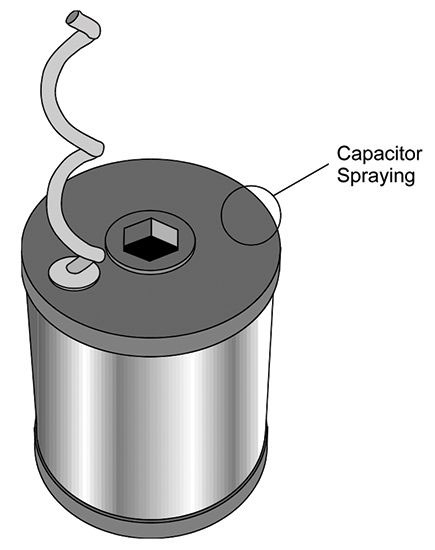
One of the very common applications that has been undertaken for over 4 decades is the spraying of capacitor ends. In the manufacture of thin film capacitors, the end faces are commonly sprayed with zinc or tin/zinc alloys. The purpose of the coating is to connect the layers of the metallic foils together and also to give a sturdy, robust layer to make soldered wire connections to the capacitors. Coatings are often several hundred microns thick. One of the main benefits of the thermal sprayed coatings are that only small amounts of heat are transferred to the capacitors, meaning there is no damage to the plastic film part. Capacitors of varying sizes are commonly sprayed, from small lighting capacitors up to large, power capacitors.
Reason for use: Electrical conductivity
The most common type of capacitor in use today is the foil-wound type. A thin film of metal, 1µm, is deposited on one side of a thin, 2.5 – 14µm, polymer film di-electric leaving one edge un-coated.
The film is wound around a central insulating core to form a ‘swiss roll’ with the un-coated edges staggered to permit the ends to be joined. The ends of the roll are then sprayed with metal to link up the electrodes and provide a surface for attaching the terminals. Larger, specialist capacitors are also sprayed.
Equipment: Metallisation Arc Spray Systems
Materials: Zinc wire, Tin/Zinc 60/40 wire.
Many metals may be sprayed on to the ends of capacitors; copper, brass, aluminium, zinc and tin- zinc alloys have been employed. Modern practice favours zinc and tin-zinc, since these materials cause less damage to the capacitor, provide a better surface for attaching and give more consistent results. The sprayed deposits may be either combustion flame sprayed or electric arc sprayed but arc sprayed coatings are most commonly used. Because arc sprayed zinc and tin- zinc give cooler deposits there is less damage to capacitors and the product is more consistent. Arc spraying also offers considerable production engineering and economic benefits.
Manufacture of Capacitors
The rolled capacitors are mounted in a jig. Masking is accomplished either by an extra film winding, which is removed before boxing or encapsulation of the capacitor, or by flattening the capacitors and packing them tightly into the spraying jig. For small quantity production, jigs may be hand sprayed or hand fed to a pistol on a fixed mounting, but, where large quantities (several hundred thousand – several million/week) are required, fully automated plant where both pistol and jig are moved to give a controlled x-y traverse may be supplied. The pistol is usually directed either normal to the capacitor end or up to 15º from the normal. The sprayed coating thickness is determined by the winding quality and is usually 0.014″-0.016″ (350µm – 400µm) but for some high class thin film capacitors, coatings may be thinner 0.010″-0.012″ (250µm – 300µm). The choice of coating depends on the joining technique; usually the coating is mainly zinc with the final 0.003″- 0.004″ (75µm – 100µm) being tin-zinc to provide a readily solderable surface. Some applications will just apply only zinc or only tin-zinc to simplify the application process.
It is preferable that metal spraying takes place after heat stabilisation, since this and the consequent shrinkage could cause a previously sprayed end connection to break up. Terminals are usually attached by soldering but in some cases micro-welding techniques may be employed.
*Excessive air pressure and spraying ranges will result in serious metal losses. It is usual to experiment with these parameters to determine the minimum values, which will give satisfactory deposits.
Advantages of Arc Spraying
- Reduced spraying ranges and higher particle velocities give better penetration of the foil windings.
- The lower heat input to the capacitors gives more consistent products.
- Arc spraying is inherently more consistent in operation.
- Arc spray coatings are denser and contain less oxide.
- The lower heat input to the capacitors gives reduced scrap rates.
- Arc spraying equipment is easily automated.
- Electrical energy costs are cheaper than fuel gas/oxygen.
- No energy is consumed when not spraying.
- Stop-Start operation is easier.
- Electrical supplies are generally more readily available.
- Potentially flammable and explosive gases are not required.
Earthing of Resin Insulators
The conductivity of thermal sprayed coatings is also used to help connection to resin resistors/insulators or graphite heating rods where aluminium or aluminium bronze coatings are very commonly applied.
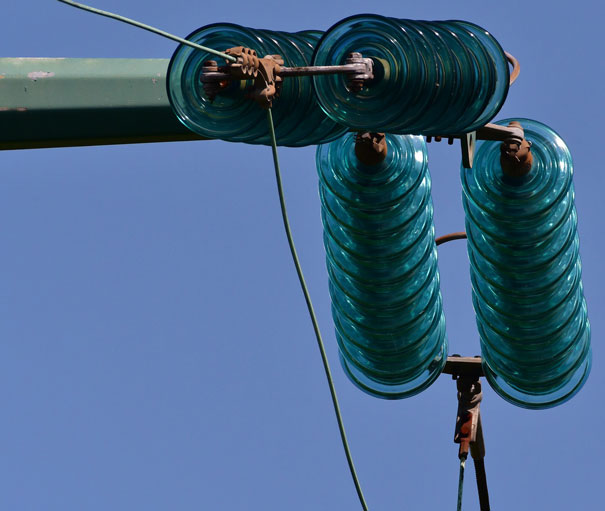
Reason for use: To produce an integral earth screen.
This ionisation is due to the corona or electrical discharge appearing around the surface of the charged conductor being insulated. It is possible to counteract this problem by using the Metallisation Arc or Flame Spray Process to apply a sprayed zinc integral earth screen around the offending areas of the resin insulators.
Equipment: In this case Arc Spray Equipment was used.
Materials: 99.99% Minimum Purity Zinc Wire.
Cleaning
Degrease by solvent vapour process if equipment available, removing all traces of release agent used in moulding process.
Preparation
- Mask all surfaces adjacent to area requiring treatment with heavy duty masking tape.
- Thoroughly inspect for imperfections or contamination prior to blasting.
- Thoroughly blast with n° 50-60 grade aluminium oxide grit.
- Ensure that areas requiring treatment are thoroughly blasted.
Application
- Check thoroughly that area to be sprayed is free from all contamination and debris
- IMPORTANT: Area to be sprayed should not come into contact with chains, rope slings, hands or any other contaminants, spraying should be completed as soon as possible after blasting.
- The Arc Spray Equipment should be set up in accordance with the MSSA manual for spraying Zinc Wire.
- The resin insulator should be rotated evenly, either mechanically or by hand, in front of the Flame spray Pistol keeping the surface being sprayed at as near as possible to 90° from the spray-stream of zinc, until a complete coating of 50-70μm is achieved.
Spraying Parameters of Zinc
- Range: 150-200mm (6” – 8”)
- Nozzle Air Pressure: 5.20 bar (75 psi)
- Voltage: 19-21 when spraying
- Amperage: 100-150 Amps
Note: Parameters may differ in accordance with type and length of power cables and hoses being used.
Demasking
- Remove all masking tape.
- Remove all over-spray, taking care to prevent coating damage.
Finishing
No finishing required, component to be used in the As-Sprayed condition.
Final Inspection
Check for cracks, defects in sprayed coating i.e. large pores, protrusions and loose particles.
Electronic-Grade Coatings with HVAF
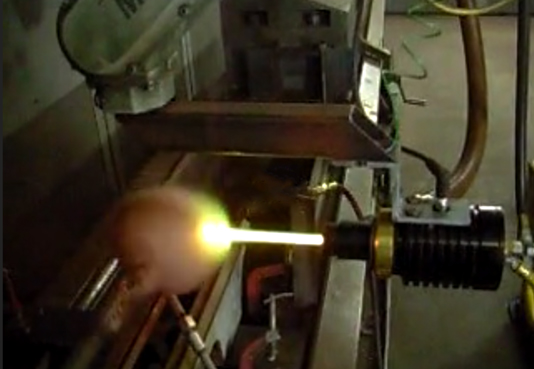
Preventing Galvanic Corrosion, Providing Electrical and Thermal Conductive Layers.
Kermetico HVAF industrial equipment provides a cost-effective way to deposit 50+ µm (0.002” +) thick conductive coatings of copper and aluminum onto electronic components.
Kermetico’s HVAF copper coatings are characterized by less than 1% porosity, low (0.30-0.40 wt.%) oxygen level, high (>75 MPa | 10,000 PSI) adhesion and electrical resistivity of 0.03 micro-Ohm*m. They could be used as a heat conductive coating in electronic packaging devices, brazing layers over aluminum heat sinks and high electrical conductivity layers.
Preventing Galvanic, Bimetallic or Contact Corrosion with Coatings
Bimetallic corrosion is also referred to as a galvanic corrosion, dissimilar metal corrosion or contact corrosion.
Bimetallic corrosion occurs when two metals with different potentials, are in electrical contact while immersed in an electrically conducting corrosive liquid. Because the metals have different natural potentials in the liquid, a current will flow from the anode (more electronegative) metal to the cathode (more electropositive), which will increase the corrosion on the anode.
In general, the reactions which occur are similar to those that would occur on single, uncoupled metal, but the rate of attack is increased, sometimes dramatically.
Preventing liquid from an appearance at the point of contact mitigates galvanic corrosion. HVAF sprayed Cu on Al surfaces provide this result.
Kermetico’s HVAF equipment deposits bulk-like Al, Cu, brass and bronze coatings up to several millimeters thick. They exhibit excellent machinability (turning, grinding, finishing) and are as engravable as electroplated copper.
Kermetico HVAF equipment deposits up to 10 kg (22 lbs.) of copper coating per hour, offering the shortest production time. Good solderability and heat conductivity of our coatings allow their use for heat sinks in power electronic applications.
HVAF High Velocity Thermal Spraying of Low Oxidation Coatings of Copper, Bronze and Brass Alloys
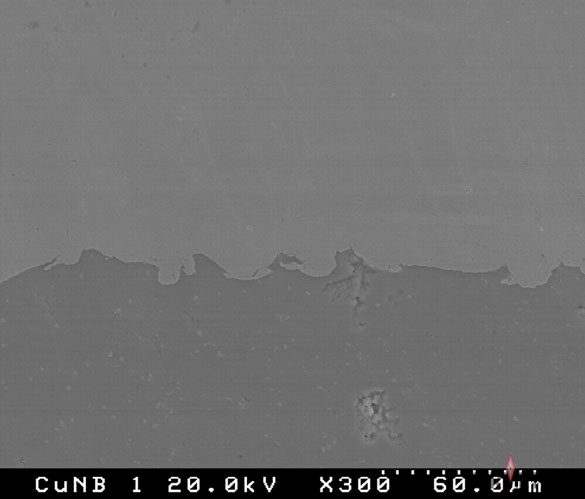
A Micrograph of a Kermetico HVAF Copper Conductive Coating
We have a time-proven approach for the high velocity thermal spray application of copper coatings with the Kermetico HVAF SL thermal spray system.
Our systems allow the deposition of copper and its alloys, including brass, bronze and some individual grades like Cu-In-Ga.
High heat conductivity copper application onto balls and other spherical parts with thicknesses of 6-mm (0.240”) and more is an easy task for the Kermetico HVAF SL system.
A customer requested the application of a high electrical conductivity copper layer with a particular pattern, 0.2 mm (0.008”) thick and the width of each band was about 2.5 mm (0.100”).
The first approach used machining and milling the copper coating to achieve the required pattern.
The Kermetico HVAF Copper coating behaves as a “solid” metal during machining. And milling through the coating down to the substrate was performed without the remaining copper layer delaminating. (This should give you some idea about the bonding and cohesive strength of the copper coating.)
Bond strength measurements report over 11,000 PSI (over 75 MPa) on carbon steel, the majority related to breaking the glue used for ASTM 633C testing.
Spraying of brass and bronze thermal spray coatings is even simpler than the pure copper.
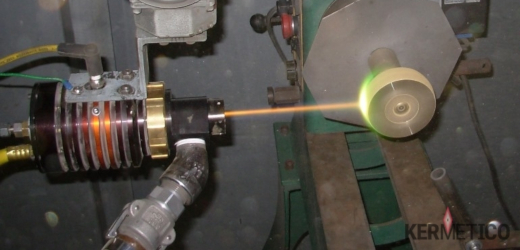
For more on the HVAF SL Specialised System, Click Here.
Radio Frequency and Electromagnetic Interference Coatings

The Metal Spray process offers a range of coatings for protecting bio-medical devices from Radio Frequency Interference (RFI) and Electromagnetic Interference (EMI). EMI and RFI coatings can be used on any substrate including, but not limited to carbon-carbon composites and carbon-fibre composites. Lightweight electronic enclosures that are commonplace in biomedical research laboratories and healthcare facilities are also metal sprayed for RFI/EMI protection. Various noise sources such as oscillator circuits, CPUs, transformers and plastic cases can also benefit from metal spray coatings. Another common type of biomedical device that utilizes metal spray coated components is x-ray equipment.
Different degrees of electrical conductivity can be achieved with the use of the correct sprayed coating. Materials such as Copper, Aluminium and Molybdenum are commonly used for electrically conductive coatings. In high temperature applications – Ferrous Chrome, Aluminium, Molybdenum Disilicide and other materials can be used.
Thermal and wear resistant coatings can also be employed to enhance the functionality of biomedical devices and implants.
For more Biomedical Metal Spraying applications, Click Here.
Electrically Conductive Aerospace Coatings

One particular application sees the Metal Spraying of electrical heater elements onto carbon fibre parts to efficiently stop ice formation on aeroplane wings at the touch of a button. Click Here for More Information.
Carbon Resistors/Brushes
Carbon and ceramic resistors and carbon brushes are sprayed with a thin film of copper to provide an electrical connection of high conductivity.
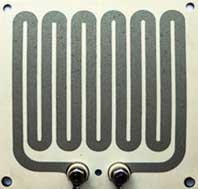
Thick film electrical circuits carry higher currents than the printed type and are produced by spraying the metal onto a non-conductive substrate usually plastic, glass or ceramic.
 |
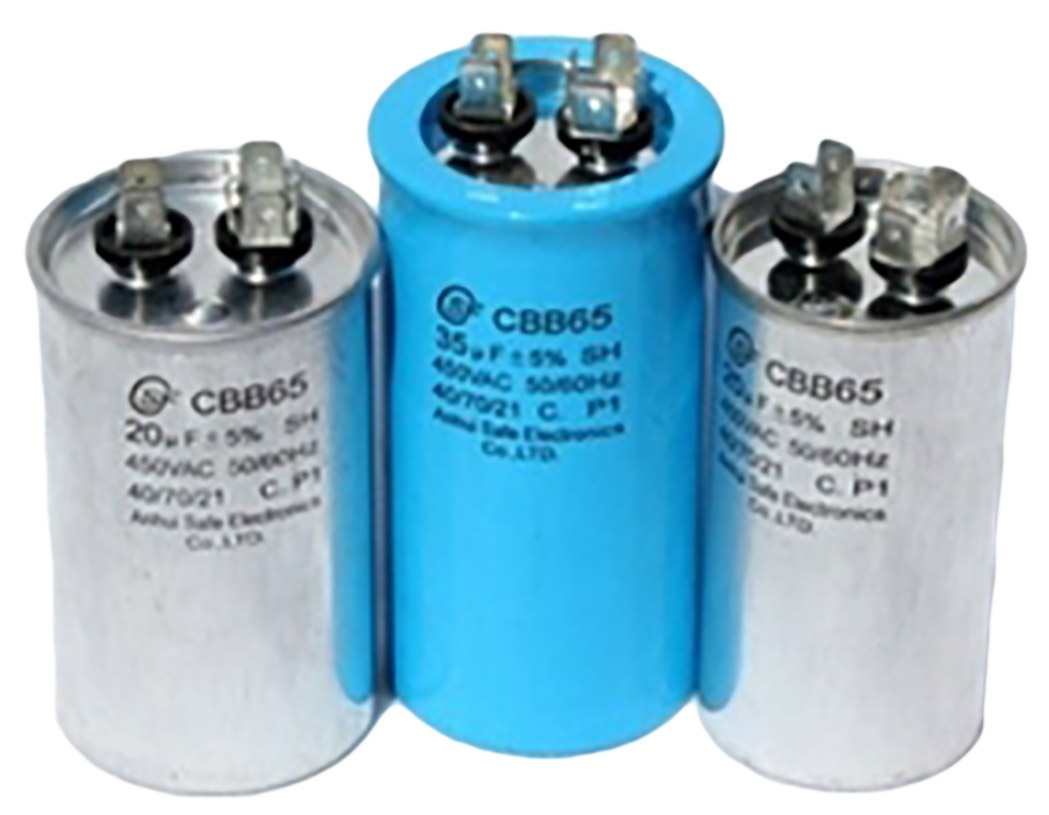 |
| Electrically conductive coating on a Dielectric substrate | Capacitors |
DOWNLOAD ELECTRICAL SOLDERED JOINTS DATASHEET
Switch Boxes
There are many applications of switch boxes being sprayed and more exciting is the use of electrical coatings in radio-rooms of mine-sweeping boats made from GRP.
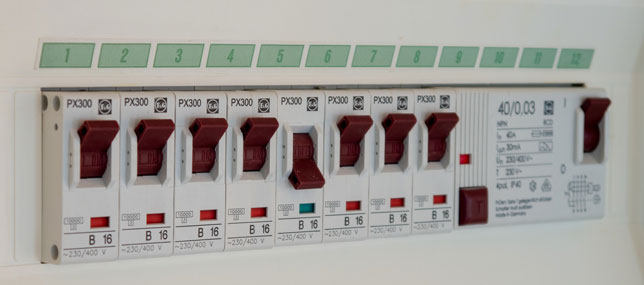
Corrosion is also an issue in the electrical industry and commonly coatings of zinc, aluminium or their alloys are applied by flame spray or arc spray to steel electrical switch boxes or transformer housings to prevent from the onslaught of corrosion.
Faraday Cages
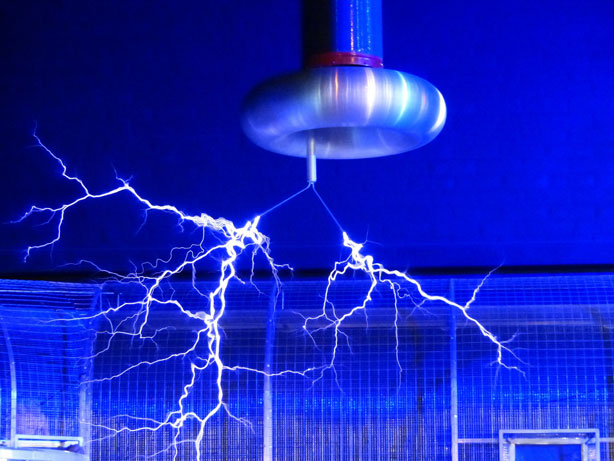
One further electrical application is to spray Faraday cages to protect against electro-magnetic emissions.
For more information on Metal Spray equipment or consumables, call us on 07 3823 1004, or email us using our contact form.