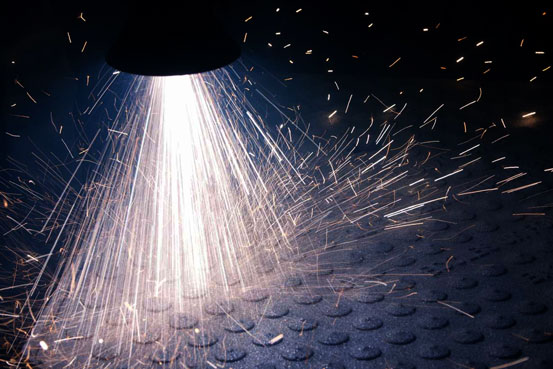
Iron and steel is used in countless industries around the world, so much so that they have both become staples in today’s society. From steel mills to rail tracks, communication towers to cast iron fencing, the industries are so diverse. Metal Sprayed coatings provide the iron and steel industries with corrosion protection, wear resistance, non-slip coatings, increased life expectancy of materials and many more.
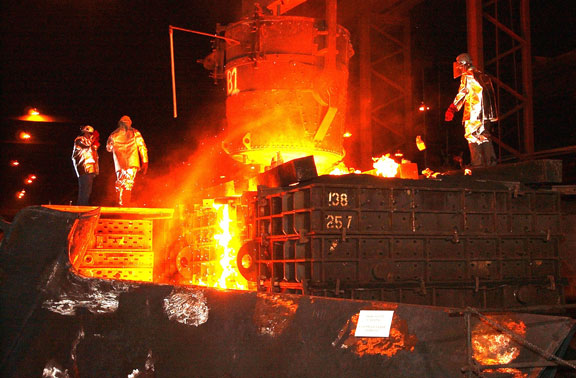
Product quality, maintenance costs, and production requirements drive engineering improvements where surface technologies play an important role in steel production.
Specific areas of steel production where coatings are used include:
- Gas ducting system from molten metal.
- Gas injection tuyeres, lances and nozzles.
- Molten steel process – ceramic nozzles.
- Continuous casting moulds.
- Continuous casting rolls.
- Various processing rolls (i.e. bridle, deflection, and annealing furnace rolls).
- Crusher rollers coated with Tungsten Carbide using HVOF helps to enhance the durability of the roller and guard against wear in a coal furnace.
Historical Steel Production
This video from the early 1970’s shows a number of metal arc sprayed coatings that were applied with Metallisation systems in steel mills and foundries. These applications are still relevant and applied today. HVOF and laser cladding coatings have joined the arsenal of coatings used to combat the harsh environments of the steel mill. The video is showing its age but demonstrates that the metal spraying process is not at all new and has a long and proven history. Particular interest is the mentioning of the thick steel coatings (up to 50mm / 2″) applied in some applications.
Railway Tracks

Railway Tracks can be Metal Sprayed for Anti-Corrosion protection.
Corrosive environments can reduce rail life vastly. Instances have shown that unprotected rails reported lifetimes of less than six months. In general, loss of rail sections can occur due to corrosion, as well as in more localised areas (e.g. around rail fastenings). It is also important to note that foot fatigue failures often occur as a result of foot corrosion. Corrosion pits (often unseen) on the bottom of the rail can initiate fatigue cracks which can then grow undetected, resulting in rail failure 1.
British Steel, the UK-based manufacturer of premium steel products, has launched a revolutionary new rail product, which can withstand the rigours of being laid in some of the most corrosive of environment 2.
Contact us for more information on (07) 3823 1004 or email us using our contact form.
1 Extracted from: https://www.britishsteel.co.uk/what-we-do/rail/zinoco-corrosion-protection/
2 Extracted from: https://www.industryupdate.com.au/article/british-steel-launches-revolutionary-new-rail-product
For more Metal Spraying on Railway and other Transport related applications, Click Here.
Protection of Iron and Steel at Elevated Temperatures
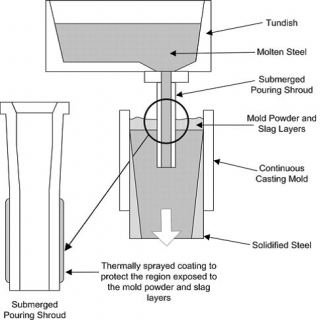
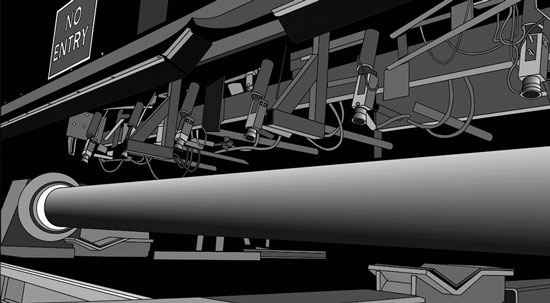
Schematic of a Submerged Pouring Shroud
Unprotected iron and steel surfaces oxidise and corrode rapidly at elevated temperatures in the presence of industrial atmospheres, hot gases and condensation products.
Experience within the Metallisation Group has shown that nickel-chromium alloys and/or aluminium coatings give protection and increase the life expectancy of steelwork up to temperatures as high as 1200°C. Because oxidation rates depend on the temperature, atmospheres, gas flow rates and thermal cycles as well as the basis material, life expectancies are not easy to predict.
Nevertheless, the protective systems devised within Metallisation have been proved over many years and are widely specified for structures such as chimneys, furnace and gas turbine exhaust ducting, fume extraction systems, motor vehicle manifolds and hot surfaces used within the food industry.
The Metallisation protective systems are designed to provide protection up to 550°C, 950°C and 1200°C (in the latter case for sulphurous environments as well as oxidising atmospheres). Each system is based on preparation to EN ISO 2063: 2005, EN ISO 8501-1 followed by the appropriate sprayed metal coating and finished by the application of a suitable Sealer.
* Where environments and temperature cycles result in periodic condensation of acidic vapours, the life expectancy of the protective system will be impaired even so, it will still be superior to that of unprotected structural steelwork.
Applications
Protection up to 550°C
After preparation, Arc spray aluminium to 130 microns with Metallisation Arc Spray Equipment and seal with Sealer Type ‘E’, Sealer Type ‘F’ (a silicone free sealer) or Sealer Type ‘G’ (for hot surfaces in the food industry)
Protection up to 950°C
After preparation, Arc spray aluminium to 130 microns using the Metallisation Arc Spray Equipment and seal with Sealer Type ‘E’ or Sealer Type ‘F’ (where silicones cannot be tolerated).
It is possible to achieve similar results with combustion sprayed coatings but only at the expense of a different sealer and an expensive heat treatment operation.
Protection up to 1200°C
Non Sulphurous Atmospheres
After preparation, Arc spray Nichrome to 325 microns and seal with Sealer Type ‘F’.
Sulphurous Atmospheres
After preparation, Arc spray Nichrome to 325 microns followed by 100 microns of aluminium and seal with Sealer Type ‘E’.
Equipment
For manual and automatic operation, see Arc Spray Equipment.
Flame Spraying of Mill Rolls
Various components in rolling operations are exposed to rigorous wear and corrosion that can be protected by thermal spray coatings to maintain their service life.
The production of steel subjects the mill components to high load stresses and vigorous corrosion by heat and corrosive chemicals that condense and attack the heat transfer surfaces. This has the potential to cause many problems throughout the steel processing lines.
Thermal sprayed components are designed to allow the steel to be processed more rapidly and efficiently thus creating the required resistance to wear and negate corrosion at high temperatures.
With over 30 variations of roller types – such as Bridle Sections, Dancer Rolls, Steering Rolls, Catenary Rolls, High Temperature Seal Rolls, Water and Non-Cooled Rolls keeping the quality, maintenance costs and production requirements are paramount to the continued production of steel. Thermal spray has a multitude of coatings that suit each specification application such as Plasma applied Ceramic thermal barrier coatings or Arc Sprayed MSSA 75 Arc Bond with its Exotherm process during spraying which produces very high bond strength coatings. Resistant to oxidation, high temperature and thermal cycling.
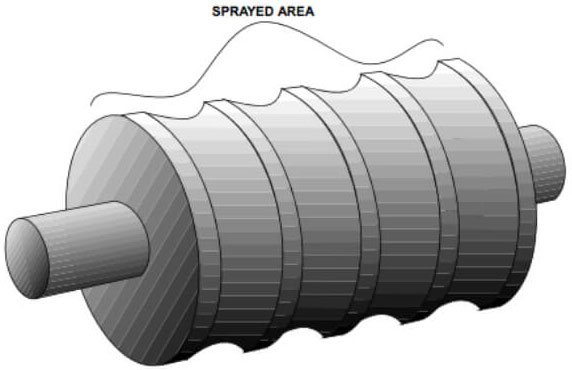
Reason for use: Grip Coating
This problem occurs mainly where a large bite angle occurs in the roll pass design, that is where the size of the billet entering the stand is relatively large compared to the size of the roll pass profile of that stand. This occurs mainly in the roughing stands at both the rod and bar mill. It was found out that certain metal sprayed coatings applied to the rolls can alleviate this problem by providing the necessary surface roughness on the rolls.
Properties of such a coating would have to fulfill the following criteria:
- Provide the necessary surface roughness.
- Provide the necessary hardness to withstand the rolling forces involved.
- Provide sufficiently high bond strength to the parent metal in order to prevent any failure in shear of the coating.
- The coating must also offer enough life until the necessary roughness is worn into the parent metal of the roll.
- The coating should eliminate all biting problems, in order to eliminate plant stoppages and scrap tonnages due to bite problems.
Equipment: Metallisation Flame Spray System
Materials: Metallisation T405/1 material exotherms during spraying, which produces a very high bond.
Economic Evaluation
The time saving is based on stoppages booked at a bar and rod mill against the biting problem. These times were averaged over two months, prior to any coatings being applied.
Material savings are based on the assumption that on average half a billet gets scrapped on start up in order to overcome this problem.
Method
Preliminary Inspection
Rolls should be checked for previous deposits and any other major faults.
Cleaning
Degrease using any approved industrial solvent may be used to completely remove grease or oil from the surface.
Blasting
Where grit blasting facilities are available, it is recommended that they be used. The standard of surface cleanliness required is as Swedish Standard SA3. Bearing surfaces not being treated should be masked before blasting.
Pre-Machining
Where grit blasting facilities are not available, pre-machining by rough threading or grinding should be carried out before spraying.
Application of Spray Coating
Spraying should begin as soon as possible after preparation and before any visible sign of deterioration occurs. The Roll is mounted in between centres. The surface speed should not be less than 60 feet per minute. (18 metres/minute).
- The Flame spray Equipment should be set up in accordance with the Metallisation Manual for the spraying of T405/1 Flame spray Material.
- The Area to be sprayed should be cleaned with a vacuum cleaner or clean air blast to remove any loose particles of grit.
- The Flame spray Pistol should be set so that the spray stream is at 90° to the surface being coated and traversed at an even speed giving a uniform coating.
- Apply T405/1 Coating to the required thickness.
- Spraying Parameters
- Range: 100mm (4”)
- Nozzle Air Pressure: 3.37 Bar (55 psi)
- Oxygen Pressure: 2.0 Bar (30 psi)
- Acetylene Pressure: 1.02 Bar (15 psi)
Flowmeter Settings: Gas 5.5, Oxygen 2.2
General
There should be the minimum of interruption from commencement of preparation to completion of spraying. At all times, the prepared surface should be protected from dust, dirt, moisture etc.
Finish Grind
No finishing is required as the coating is used as sprayed.
Spinning Machine Trough Ceramic Coating
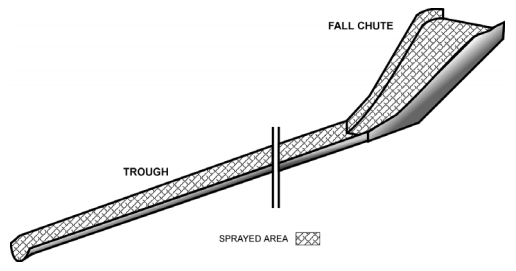
Reason for use: To lengthen the service life of troughs and fall shoots used in the production of Ductile Iron Pipes.
For many years with in the Ductile Iron pipe industry problems of short life expectancy of the troughs and fall chutes has been experienced on the Centrifugal Casting Machines (Spinning Machine), typically one trough per week.
This has contributed to high yearly costs due to downtime, trough replacement and repairs. Metallisation has developed a coating system that has been proven within the industry to extend the life of the trough and fall chutes by a minimum factor of 13. This has reduced the maintenance costs, downtime, trough replacements and trough repair time from 48 Hours to 5 hours.
The four tier coating system is applied with the MK74 Powder Pistol for the first three coats and MK73 Flame spray Pistol for the final flash coat of aluminium (the aluminium coating can be applied using the MK74 Powder pistol if required).
The MK74 Powder pistol can either be hand held or machine mounted. With the delivery of the powder through a small gravity fed hopper mounted on the pistol or a separate powder feeder (2007MF-PF).
Equipment
Metallisation MK74 Powder Flame Spray Pistol
Metallisation MK73 Wire Flame Spray Pistol
Materials
If the trough or the fall chute are badly pitted, a weld repair will be required to build up the surface prior to spraying, this will require grinding back to blend in the surface. It is normal to gritblast the components surface prior to applying the coating system; this is to produce the ideal receptive surface.
Blasting
Where grit-blasting facilities are available, it is recommended that they be used. The standard of surface cleanliness required is as Swedish Standard SA3. Bearing surfaces not being treated should be masked before blasting.
Note: It is advisable to repair trough or fall chutes before they fail, as this reduces the requirement of weld repairs and grinding. You must remove the sprayed coating before re-spraying.
Application of Ceramic Coating
Spraying should begin as soon as possible after preparation and before any visible sign of deterioration occurs.
- The Flame Spray Equipment should be set up in accordance with the MSSA Manual for the spraying each of the Flame Spray Materials.
- The Area to be sprayed should be cleaned with a vacuum cleaner or clean air blast to remove any loose particles of grit.
- The Flame Spray Pistol should be set so that the spray stream is at 90° to the surface being coated and traversed at an even speed giving a uniform coating.
- Apply each of the coatings to the required thickness.
Spraying Parameters
Refer to manual for parameters for given wire diameter Flash Coat. There should be the minimum of interruption from commencement of preparation to completion of spraying. At all times, the prepared surface should be protected from dust, dirt, moisture etc.
Finishing
No finishing required, component to be used in the as-sprayed condition.
HVAF Wear Resistant Coatings for Steel Rolls
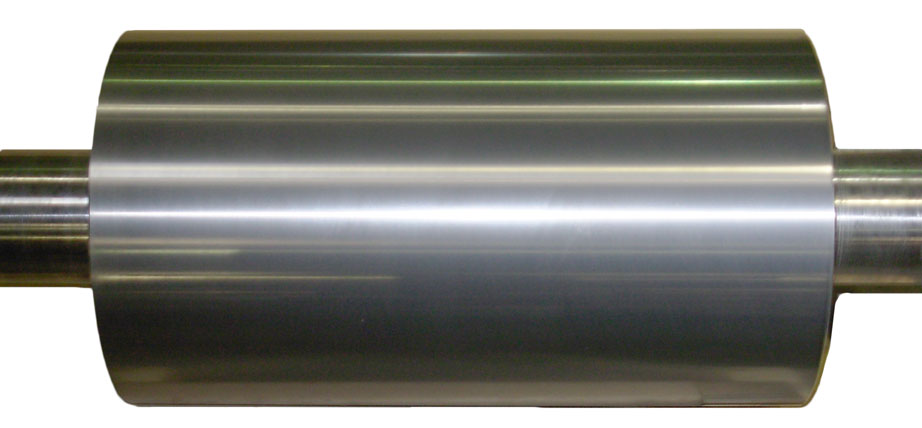
There are a significant and growing number of steel rolls where high velocity thermal spray coatings are feasible.
Annealing Line Rolls are being protected mainly with coatings using oxidation-resistant MCrAlY cermets for extremely high furnace temperatures. For lower-temperature heat treatment of low-manganese steels, Cr3C2-NiCr coatings are used.
For high-temperature annealing of low-manganese steels, oxides, borides or cermets of MCrAlYs and alumina have been used in production. High-manganese steels result in more severe problems for rolls.
Corrosion and oxidation products, typically in the form of oxides of chromium and aluminum on MCrAlY coatings, react with manganese from the steel reducing the service life of the coatings and the quality of the steel sheets. We provide HVAF coating solutions that optimize MCrAlY coating properties.
Continuous Galvanizing Lines
Degradation of sink rolls and other rolls associated with continuous galvanizing lines is due to zinc or aluminum reactions with iron from the steel rolls. These reaction products degrade the rolls and affect the surface of the steel products. Some of these reaction products are called dross. The most commonly used zinc baths are galvanized zinc with minor concentrations of aluminum and minor amounts of silicon.
Currently, coatings use tungsten carbide/cobalt powders applied via high velocity thermal spray technology. The success of these coatings depends on the spray parameters, powder manufacturing method, and sealant system. The key to increased life is reducing the coating material degradation during the application process.
HVAF Coatings
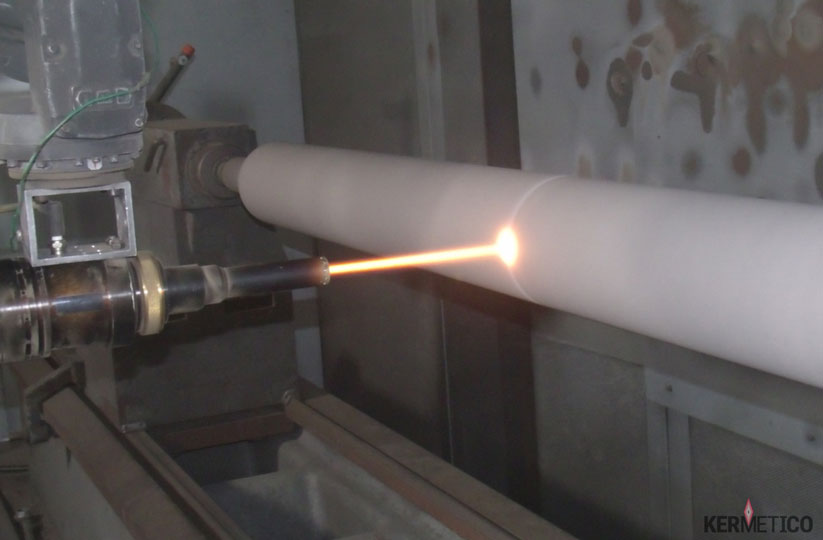
Kermetico High Velocity Air Fuel (HVAF) Coatings have been shown to be very competitive in protecting steel rolls in annealing and continuous galvanizing lines.
Kermetico HVAF carbide coatings are superior to HVOF and Detonation rivals regarding wear resistance, corrosion protection and production cost. The high velocity of the in-flight particles (higher than 1,000 m/s | 3,300 ft./sec.) in the Kermetico HVAF process enables the production of very dense coatings with high bond strength.
Moreover, the low combustion spraying temperature (1,960-2,010°C | 3,560-3,650°F depending on fuel gas) and gentle particle heating lead to minimal feedstock phase transformation and almost nonexistent elemental depletion or decomposition of the in-flight particles.
Furthermore, the replacement of pure oxygen in the HVOF coating process with air in the Kermetico HVAF process significantly reduces the oxide content in the coatings, which is desirable for high-performance coatings.
Steel Roll Coatings
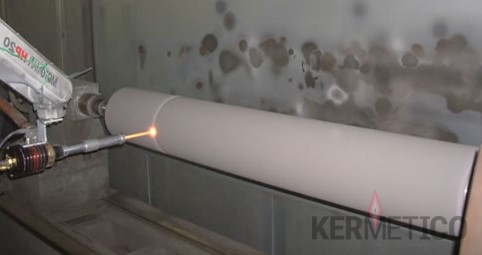
The traditional thermal spray approach is to melt and atomize the feedstock, propel it to the surface of the target part whereupon contact ‘splat cooling’ builds up a coating.
The Kermetico HVAF process operates differently.
The feedstock heats the material to near its liquid phase temperature without exceeding it.
The particles are then accelerated to an optimized high velocity, and when the particles impact the substrate, there is a rapid conversion of kinetic to thermal energy that allows for the plastic deformation of the particle and a bond which we cannot accurately measure.
In the ASTM 633C bond test, the only result we get is broken glue, even with 0.040“ (1 mm) of WCCo 88/12.
Blasting
Usually, we deposit coatings using robotic blast and spray operations.
We blast a surface with a Kermetico HVAF gun (it is extremely fast and uniform) and spray with the same gun after switching the powder feed hose and perhaps changing the nozzle.
It is much faster, more accurate and needs much less grit than manual blasting.
It also provides very even surface preparation and induces less stress into the base metal.
Structural Steelwork

The Metallisation system is being specified on an increasing number of buildings in addition to the more normal use of the process for the protection of structural steelwork, such as bridges, chemical plants and general engineering fabrications.
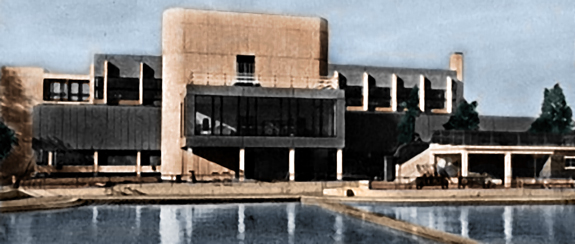
It has been used on a number of public swimming pools where high humidity is an obvious added contributory factor to normal atmospheric corrosion. The chlorination process of water treatments also results in aggressive vapours being given off from the surface of the water. The swimming bath (UK) shown in the photograph is a typical example – all of the structural steelwork for the building has been treated. The particular Metallisation system used consisted of a coating of metallic zinc of high purity followed by a special sealing and passivating treatment. The passivating agent ensures long life of the zinc coating and at the same time permits the zinc to give cathodic protection to the steel in a way that is not possible with zinc-rich paints.
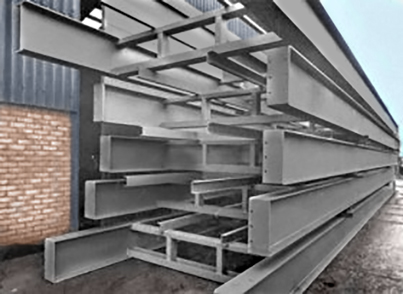
The anti-corrosion protection of steel assemblies by metal spraying provides a reliable, long- term and economic solution to the problem of corrosion. Metallisation Service Ltd has protected 247 tons of steel fabrications for one of their customers. The fabrications were grit blasted then zinc sprayed to 100 microns (0.004”) thickness and finally sealed by one coat of chlorinated rubber sealer to Metallisation Zn4/r specification.
Communications Towers

Communications towers have been subject to the zinc metal spray process for decades. This procedure is completed in order to improve safety and long service life to both the workers as well as the equipment.
A typical example of current trends is provided by a 30.48m (100ft) mast commissioned for the North Thames Gas Board UK, for installation at its headquarters. The days of the simple, straight up and down radio mast have gone and the North Thames Gas Board structure is built up of a series of short interconnected mild steel tubes growing on a modular basis of triangular and oblong sections. The two hundred feet long sections are connected on an octagonal platform fabricated into the ends of each section.
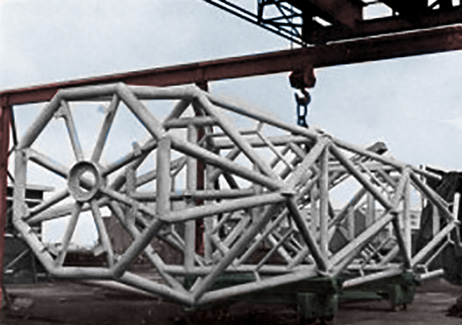
Structural work was carried out by S.A.S. Structures of Chichester in association with Mr A H Beer, Constructions Engineer for the North Thames Gas Board. Fabricated from steel tubes the mast presented the obvious problem of maintaining it in sound structural condition. It was decided that zinc spray offered the best solution to this problem, and the sections of the mast have been sprayed with 100 microns (0.004”) Zinc (at the Pear Tree Lane, Dudley, Plant of Metallisation Service Ltd). The protection applied to both the steel tube formation of the mast and the welded joints is paramount to safety and long service life.
Run Out Roller
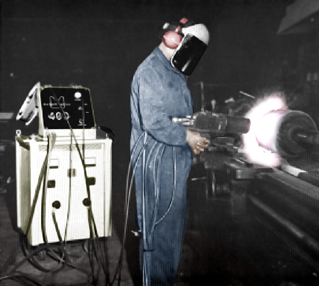
The above image shows a run out roll from a Steel Works being resurfaced with a deposit of S2 Steel applied by an Arc Spray system. Many of these rollers have been reclaimed by this method with deposits of up to 12.7mm (½”) thick. In most cases this would result in a saving of up to 60% of the cost of a new roll and of course being back in service within a matter of hours.
Mill Roll Journals
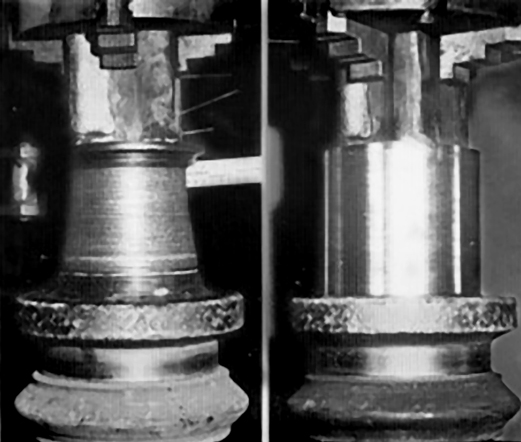
A badly worn hot mill strand roll reclaimed with 25mm (1”) deposit of S2 Steel. The heavy wear that rolls of this type are continually subject to is ample testimony to the strength of the arc spray deposit and its wear resisting properties. Rolls of this type are now sprayed with S2 as part of the original manufacture in order to obtain the longer service life that the arc spray deposit provides.
Valve Surface Protection
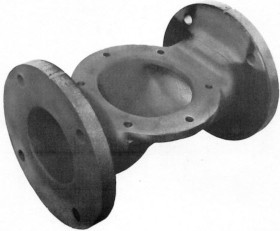
Solids contained in liquids, which are being pumped through tubes and valves often cause damage to the valve faces rendering the opening and closing mechanism ineffective. In order to overcome this, a number of valves have been successfully treated. The flanges of the valves were masked and after grit-blasting the valve faces were metal sprayed with a nickel chrome base coating of 50 microns (0.002”) followed by 300 micron (0.012”) Blue Corundum (alumina/ titania, Al2O3 – TiO2).
There is no limit to the size of valve that can be treated, and there are no temperature or pressure limitations with the treatment, which can be applied to iron or steel castings.
It is worth mentioning that many valve facings are metal sprayed to prevent corrosive attack from chemicals and other toxic liquids.
Manhole Covers
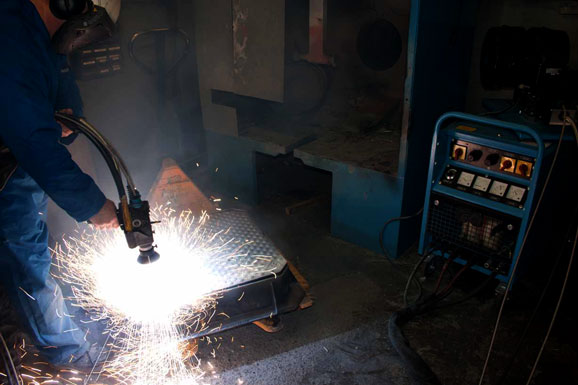
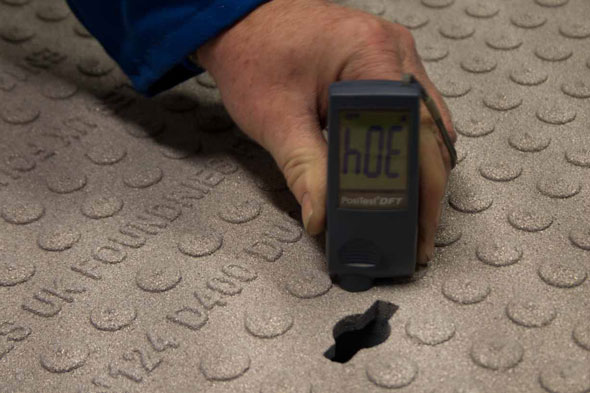
Cast iron manhole covers have been sprayed with 28E Non-Slip coatings for safety purposes.
A 28E coating is a thermally sprayed coating that can be applied with a rough texture and has excellent non-slip properties, while being extremely hard and resistant to wear.
The coating provides:
- A suitable level of grip to avoid personal slips or industrial skidding.
- Comparable corrosion protection to aluminium, as used in aggressive environments.
- Easy application by a long-standing process, covered by international standards.
The resultant coating is corrosion resistant and because of its durability, site owners can be confident that once applied, they can forget about rust or slipping for many years.
Ductile Iron Pipes
Ductile iron pipes are zinc sprayed to provide corrosion protection. Over the last 40 years in Europe, the ductile iron pipe has progressively replaced the grey iron pipe. One of the main factors which will determine the life of ductile iron pipe is its ability to resist corrosion. To guard against risk of failure from exterior corrosion the manufacturers have introduced a metal sprayed zinc coating in immediate contact with the outside surface of the pipe. This is then being supplemented by bituminous paint and a polyethylene sleeving. Zinc coatings of up to 200g/m2 are now being applied, which are well within the European norm, only asking for a minimum of 130g/m2 of zinc. Other coatings of zinc/aluminium alloys are also commonly applied.
Cast Iron Fencing Restoration

Image Provided Courtesy of Metal Spray Hungary
Metal Spray Hungary completed the restoration of cast iron fencing using Metallisation Flame Spray equipment.
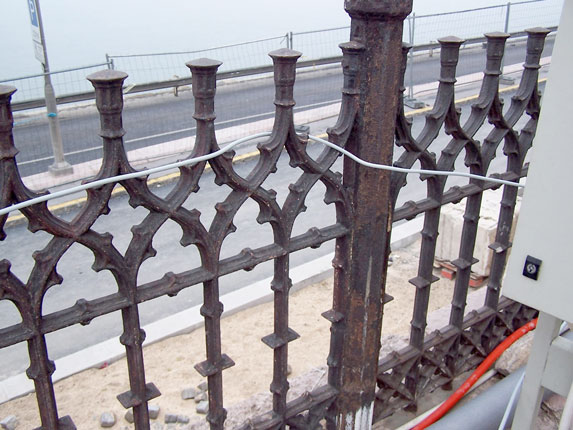
Image Provided Courtesy of Metal Spray Hungary
The surfaces were prepared thoroughly before a 150-300μm aluminium coating was applied to provide an anti-corrosive layer.

Image Provided Courtesy of Metal Spray Hungary
A paint topcoat was then applied to further extend the life of the coating and to provide a decorative finish.
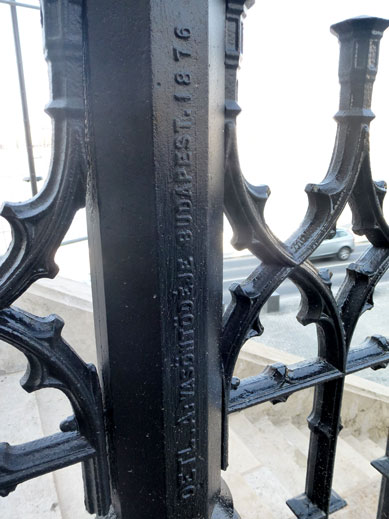
Image Provided Courtesy of Metal Spray Hungary
Architectural Forged Iron Ornaments Restoration
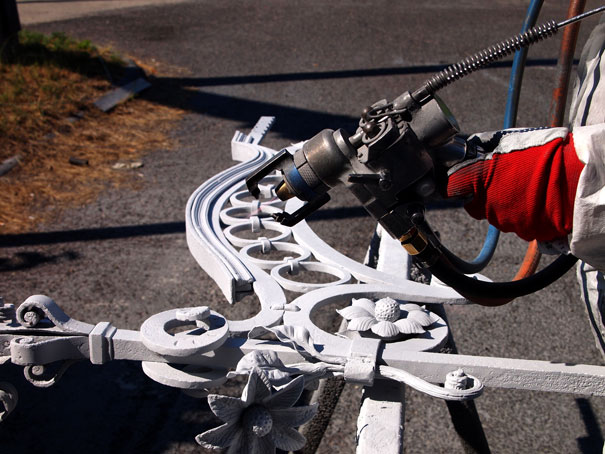
Image Provided Courtesy of Metal Spray Hungary
The restoration work on forged iron ornaments was completed by Metal Spray Hungary.

Image Provided Courtesy of Metal Spray Hungary
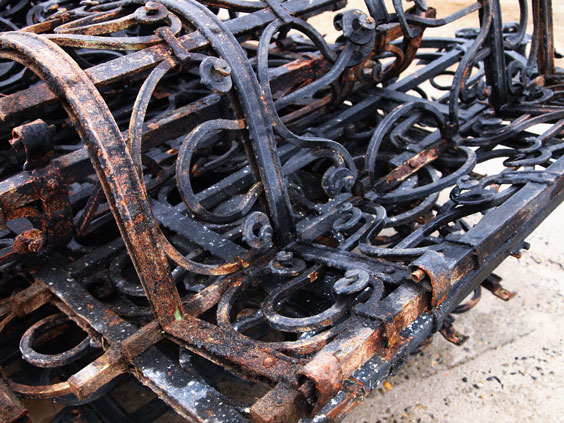
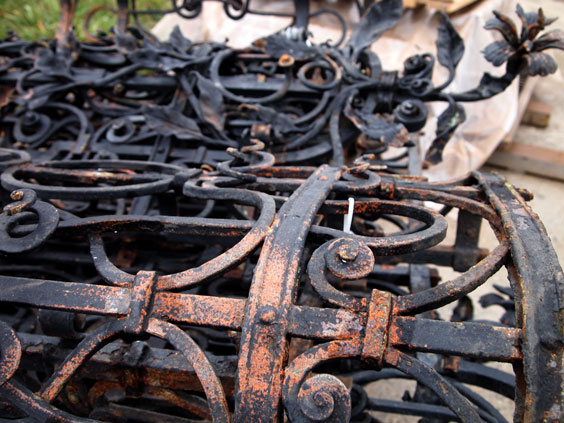
The ornaments were more than a century old and had sustained serious marks and damage due to general wear and tear over time, as well as being situated in a C5 corrosion category urban environment saturated by exhaust fumes.
Images Provided Courtesy of Metal Spray Hungary
The damage caused thick layers of rust in some areas, and several layers of paint residue in others.
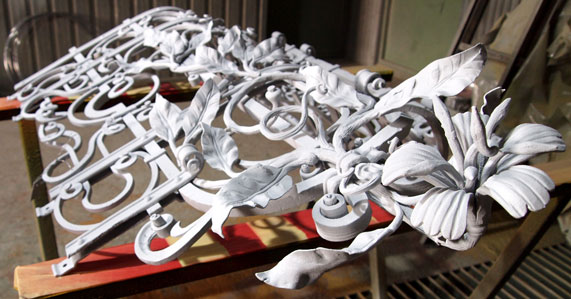
Image Provided Courtesy of Metal Spray Hungary
As a result, the surfaces were cleaned meticulously to remove the residues and rust. The ornaments were then Metal Sprayed with Aluminium using either a Metallisation Flame Spray or Arc Spray system.
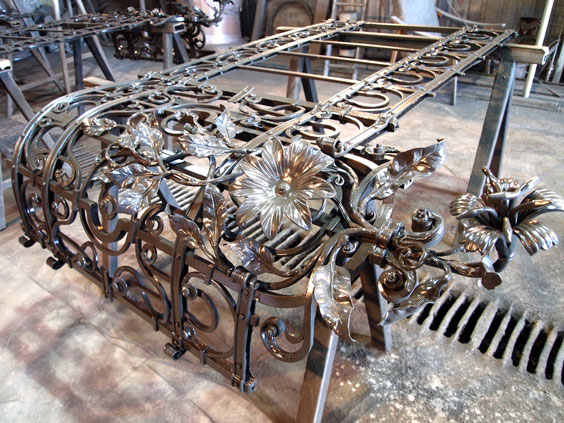
Image Provided Courtesy of Metal Spray Hungary
A primer coat was then applied, followed by a UV resistant topcoat.
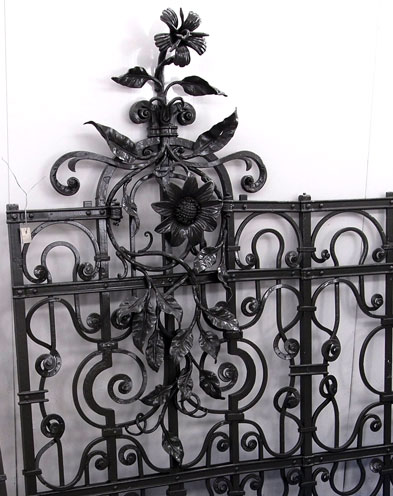
Image Provided Courtesy of Metal Spray Hungary
Industrial Pipework Silencers
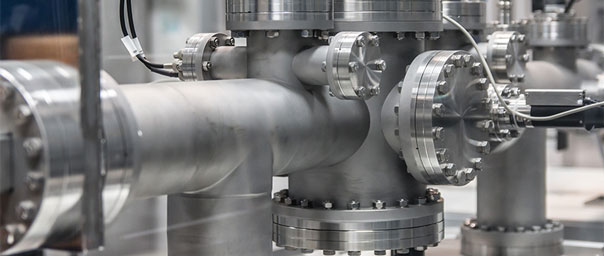
Primary and secondary silencers on connecting industrial and marine pipework are subject to the Metal Spray process. A Thermal Sprayed Aluminium (TSA) coating provides an excellent protective coating where galvanising isn’t practical and high heat/chemical resistance is required. This TSA application also adds years to the expected longevity of the pipe work by providing an anti-corrosive layer of protection.
For more information on Metal Spray equipment or consumables, call us on 07 3823 1004, or email us using our contact form.