Video Provided Courtesy of TRADSAFE.
Metal Spray coatings have been used in the oil and gas sector for decades. Both engineering and anti-corrosion coatings are used in the industry. Applications include the reclamation of components subject to wear and/or corrosion, as well as resistance to heat by employing Nickel & Cobalt based formulated alloys. Oil industry pipes, risers and structures are exposed to harsh elements. Thermal sprayed aluminium protects against corrosion in excess of 20 years – even in the toughest of environments. The use of metal/thermal spray in the oil and gas industry also includes applications on flare booms, pipework, sub sea valves and many more.
Metal Spray Supplies Australia is one of Australia’s leading suppliers of Metal/Thermal Spray equipment and consumables to the Oil & Gas industry. The range includes but is not limited to Arc Spray, Flame Spray, HVOF, HVAF and hard surfacing products for wear solutions on critical applications. MSSA can also supply cast components as cast or fully machined to customer specifications and design.
Electrical Submersible Pumps
Stainless Steel Coatings Protecting ESP Housings from Downhole Corrosion

Kermetico HVAF thermal spray stainless steel coatings provide much better corrosion protection for oilfield submersible pump housings than conventional TWAS (Twin Wire Arc Spray) Monel* layers at a lower cost.
- The hardness of a TWAS Monel coating is 20-22 HRC, super stainless – 56-60 HRC.
- The porosity of a TWAS Monel coating is 15-20%, while the HVAF super stainless layer has less than 1%.
- Monel is much nobler than steel, resulting in electro-chemical corrosion in the case of coating failure. Super-Stainless has about the same electro-chemical potential as the base metal, minimizing this risk for submersible pumps.
- 150 microns (0.006”) of an HVAF iron-based coating protect ESP housings better than 250 (0.010”) microns of TWAS Monel + 150 (0.060”) microns of Epoxy with half the cost.
Stainless Steel vs. Monel+Epoxy in Corrosion Prevention of Artificial Lift Pump Housings
Electrical Submersible Pumps suffer from corrosion in oil wells. The typical corrosion factors include galvanic corrosion, CO2 and H2S corrosion at elevated temperatures of 90-120°C (194-248°F). And making ESP housings from bulk stainless steel is not economical. The duplex Monel + epoxy coating was developed more than 30 years ago to insulate ESP housing from aggressive oilfield environments. It works as long as the epoxy layer keeps its continuity because arc or flame-sprayed Monel coatings are too porous to isolate the base material thoroughly. Epoxy is soft. The handling of sub-pumps during a well completion frequently results in coating damage. Electro-chemical corrosion starts as soon as the fluid reaches the ESP base metal due to a coating failure. Since the coating is the cathode and the exposed steel substrate is the anode, a poor anode/cathode ratio results in the rapid development of galvanic corrosion. There are cases where pump failure happens in some weeks after completion due to galvanic corrosion.
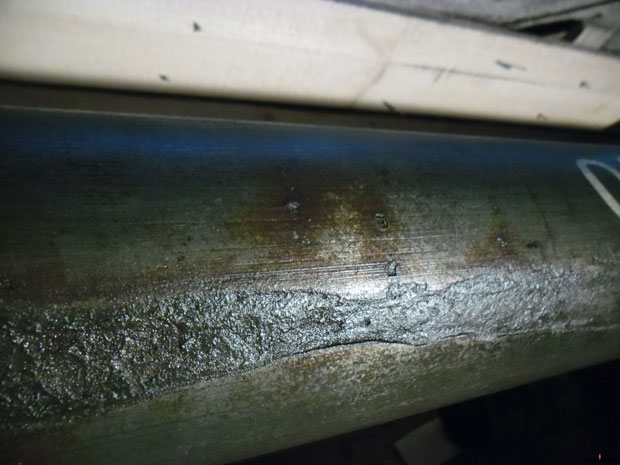
A Sample of Electro-chemical Corrosion of an ESP with a TWAS Monel+Epoxy Coating
Iron-based high-velocity stainless steel coatings were developed by Kermetico’s Russian partner, TSPC, at the beginning of the XXI century and quickly become standard in the Russian oilfields with the most aggressive environments. The coating exhibits bond strength over 80 MPa (12 KSI), porosity less than 0.5% and hardness of 56-60 HRC.
Applied to 6 mils (150 microns) thickness, it is non-permeable to gas and liquid, and flexible enough to withstand deformation of long and thin parts during handling and service.
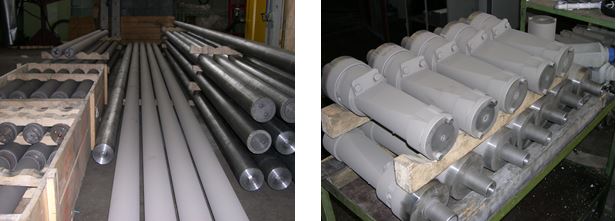
The coating’s performance is proven in industry, where over 48,000 meters (30 miles) of housings have already been protected during the past few years. Current coating production exceeds a hundred new pumps and motors per month.
Virtually no corrosion failures of housings with this stainless coating have been recorded.
The Properties of Kermetico HVAF Stainless Steel Coatings
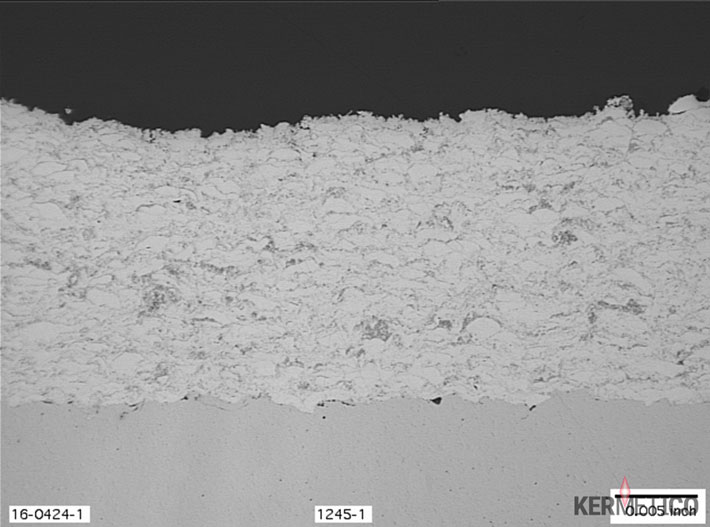
A Typical Micrograph of a Kermetico HVAF Sprayed Fe-based Coating
Fe-based super stainless coatings are better than Monel in hardness, density, bond strength and cost. The only reason that Monel coatings are still applied somewhere – some old standards and Monel coating facility managers who are trying to gain the maximum profit from their old equipment.
For more information Click Here.
Offshore Oil Platforms Corrosion Protection
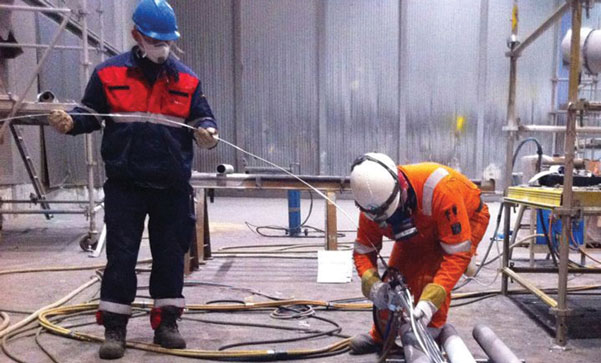
Metallisation MK73 uses Thermal Sprayed Aluminium (TSA) to Protect Offshore Oil Platforms From Corrosion
Reason for use: Corrosion protection over long-term in harsh off-shore environment.
Metallisation flame spray equipment has been used to protect a BP Clair Ridge offshore oil platform from corrosion. The 168 metre high platform will be installed in the North Sea west of the Shetland Isles.
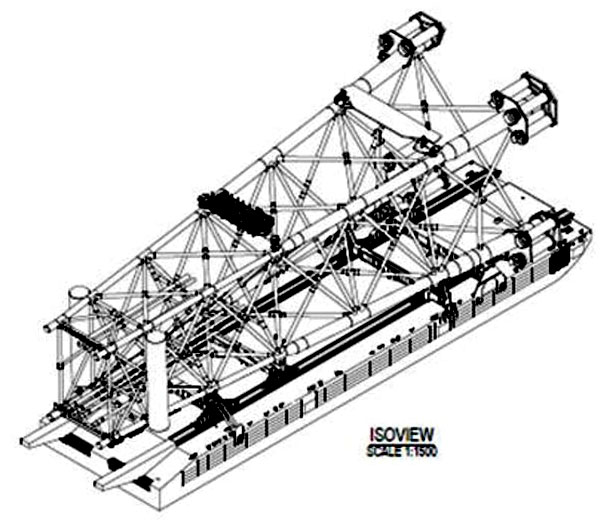
Clair Ridge jackets have seven storage tanks, two drill water tanks and a base oil tank, in the Drilling Production (DP) jacket, and four diesel tanks in the Quarter Utility (QU) jacket. The project specified the jackets to be metal sprayed, to protect from corrosion, using arc spray equipment. The system for the internal storage tanks was to be sprayed with 200 – 300 microns Thermal Sprayed Aluminium (TSA), the drill water tanks were to be sealed with aluminium silicone and the base oil and four diesel tanks were to be left unsealed.
Due to the complexity and dimension of some of the jacket components, it was impossible to coat all of them using arc spray equipment. Piping nozzles in diaphragms, pipe supports and difficult to access areas were coated using the Metallisation MK73 flame spray equipment and the deflected flame spray extension, which was designed specifically for difficult to access areas. The major advantage of the MK73 system is the extra long supplies package that accompanies the equipment, which in this instance made an extremely difficult spraying project much easier and safer.
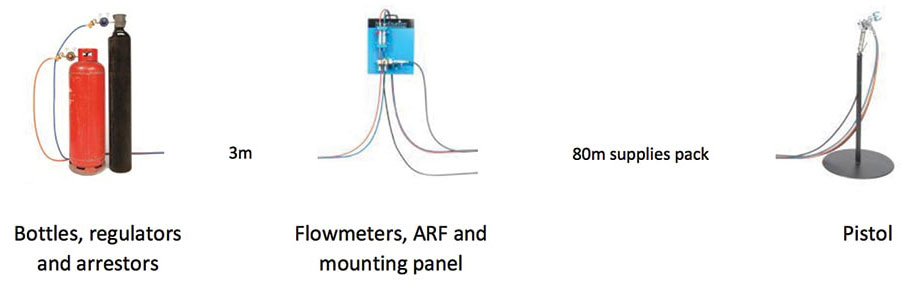
To metal spray the internal surfaces of the pipes, the operators had to crawl within the pipes and, with a dimension of just three and a half metres or less, it was no mean feat. The 80 metre long supplies package allowed the operators to leave the control panel and gas bottles outside, enabling them to reach the difficult to access areas safely and effectively.
The Metallisation deflected flame spray extension is ideal for onsite use. It comes in three lengths, 150mm, 300mm and 450mm and can be used with either 3.17mm or 4.76mm wires. The unit can spray directly forward or at a deflected angle, which can range from 00 to 900 by varying the deflector air pressure. The deflection nozzle can also be rotated through 1800 to allow spraying in a 3600 arc around the pistol.
Metallisation attended site for several days to train, support and customise the system to meet with the requirements of this demanding application. It was important for us to get good, first hand insight into the job which enabled us to fully understand the issues facing our customer. Safety is obviously critical in these confined spaces and keeping the gas supply and control panel outside of the confined space greatly assisted in safe completion of the job. Once inside the jacket, the access to some of the spray areas was very tight. The general flexibility of the MK73 flame spray system combined with the deflected extension made the job quicker and easier to complete.
In the Metallisation Wire Flame spray process, the raw material in the form of a single wire or cord, is fed by a driven roller system into the centre of an oxygen-gas flame where it is melted. An annular air nozzle then applies a jet of high-pressure air, which atomises and projects the molten material towards the work piece. The molten spray solidifies instantly on the component surface to form a dense, strongly adherent coating that has no drying or curing time. The driving of the wire is typically via an air motor and gearbox that forms part of the pistol. The gas fuel used varies, depending on the wire to be sprayed and in some cases, the application. The two most common gas fuels used are Propane and Acetylene.
David Stowers, Lead Coating Inspector on the project, says: “I am very pleased with the performance of the MK73 system. It proved to be a really useful tool in helping us to reach a successful conclusion on the TSA scope of this project. The angled deflector extension arm was perfect to reach the most difficult surfaces. I wouldn’t hesitate to recommend the Metallisation team and its equipment.”
Hutton Tension Leg Platform
In the early 1980’s Conoco commissioned the Hutton Tension Leg Platform. For the first time the platform was not fixed solidly to the sea bed but was floating, tethered by several tubular steel legs.
Conoco Oil rig tension leg for the UK North Sea were coated with Aluminium as it was the only system that could meet the harsh working environment.
Automatic application by Arc Spray of Thermal Sprayed Aluminium (TSA) onto Oil Rig Risers.
Mud Motor Rotors
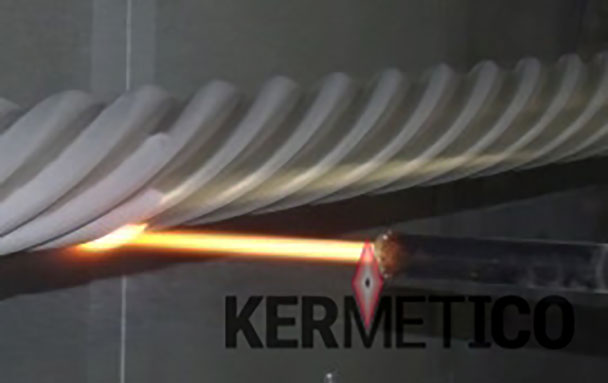
HVAF Thermal Spray Equipment and Wear Resistant Coatings for Mud Motor Rotors
Wear resistance of the mud rotor surface is one of the key factors of an oil well directional drilling cost.
While there is a consensus that “old school” hard chromium coatings are insufficient for the drilling application, there are still a lot of attempts to enhance HVOF tungsten carbide coatings with “ceramic sealants.” The whole idea of sealing a ground coating having less than 1% porosity seems pointless to us.
We believe that the reason for HVOF WCCoCr coating failures hides not in the 5 microns of a surface being sealed but in the HVOF process flaws. And we know how to fix it.
Kermetico HVAF technology and equipment provide a way to protect mud motor rotors with gas-tight, 1,350-1600+ HV300 hard and ductile tungsten carbide coatings. Other mud motor components, such as flow restrictors and drive shafts, also benefit from these coatings. And Kermetico produce Convertible HVAF + HVOF equipment for companies that still need to spray conventional HVOF coatings for conservative clients.
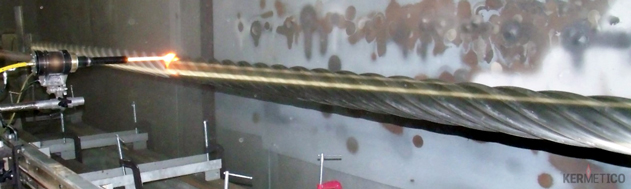
The Kermetico HVAF System Spraying a WCCoCr Coating onto a Mud Motor Rotor
Numerous researchers have found that Kermetico HVAF WCCoCr coatings provide wear resistance several times longer than HVOF or electrolytic hard chrome.
The Wear of Mud Rotors
Downhole drilling motors, or positive displacement motors (PDM), consist of a helically shaped metallic rotor rotating within a molded stationary elastomer lined stator.
The heart of the mud motor is the rotor-stator pair. The circulation of the rotor transforms the pressure of hydraulic energy of drilling mud into the mechanical energy causing the motion of the drill.
Mud-rotors have been plagued with excess wear, corrosion, erosion and coating delamination resulting in small drilling times. Most mud rotors had historically been chrome plated or nickel plated, but frequent coating failures have forced the industry search for other solutions.
Drilling mud is contaminated with chlorides that permeate the micro-cracks and pores of traditional chrome plating and corrode the underlying steel.
The appropriate coating should increase drilling times, reduce wear, increase corrosion resistance and minimize repair times.
The coating must be capable of sustaining horizontal and vertical flexing and needs to be impact resistant.
For performance in the harsh conditions the coating should:
- Have very low residual stresses
- Be as ductile as possible
- Have very high cohesive and adhesive strength
Kermetico HVAF Coating Features
Kermetico High Velocity Air Fuel (HVAF) has been shown to be very competitive for mud rotors’ protection.
HVAF carbide coatings ARE superior to HVOF rivals regarding both wear protection and production cost. The high velocity of the in-flight particles (greater than 1,000 m/s) in our HVAF process enables the production of very dense coatings with high bond strength.
Moreover, the small combustion spraying temperature (1,960-2,010°C | 3,560-3650°F depending on fuel gas) and gentle particle heating lead to minimal feedstock phase transformation and almost nonexistent elemental depletion/decomposition of the in-flight particles.
Furthermore, the replacement of HVOF using pure oxygen with air in the HVAF process significantly reduces the oxide content in the coatings, which is desirable for high-performance coatings.
For more information, Click Here.
Repair of Chemical Plant and Oil Refinery Parts with HVAF and HVOF Equipment and Services
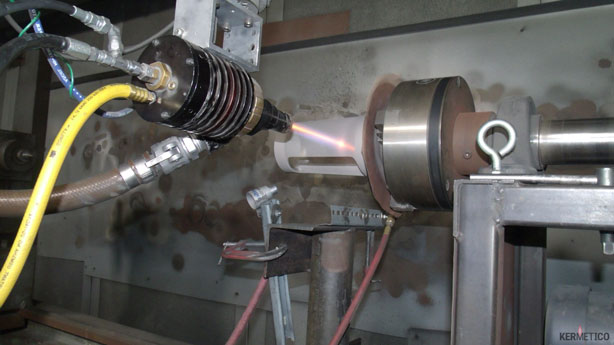
HVAF Monel Coating of a Plug
Kermetico HVAF equipment provides an efficient way to repair refinery and chemical plant parts worn by erosion, corrosion and abrasion or incorrectly machined. The HVAF thermal spray systems deposit ductile, high-bond tungsten carbide coatings as hard as 1,600+ HV300, gas-tight Hastelloy-type, Ni- and iron-based coatings.
How to Mitigate Abrasive Wear, Erosion and Corrosion of Plant Processing Equipment
When building a new treatment plant, entrepreneurs have one clear goal in mind – organize a continuous process in the most efficient way. Any downtime will result in losses amounting to anywhere from hundreds of thousands to millions of dollars, and unfortunately, equipment damage and failure are regularly the cause of incidents.
Surface coating minimizes equipment damage and related non-productive time. By applying the appropriate coatings to key parts, such as vessels, shafts, stems, sleeves, pump impellers, and valves, operators improve equipment performance and realize improved durability over traditional manufacturing processes, such as manual metal arc (MMA) welding and hard chrome plating (HCP). By reducing the likelihood of a breakdown, and therefore the need for an equipment changeover, plant operators can be confident that their refineries will continue working with fewer equipment-related delays.
Recent HVAF Coating Applications in Chemical, Oil and Gas Industries
The excellent technological and cost efficiency of the Kermetico HVAF processes and improved coating quality generate growing interest of the coating markets, including chemical, oil and gas industries. Kermetico Inc. routinely applies HVAF repair coatings for traditional HVOF applications on valve gates, valve balls and stems, pump shafts, sleeves, packing nuts and cartridges, compressor rods and turbine shafts.
A Wear Resistant Coating for the Restriction Grid and Sliding Gate of a Catalyst Tower
The surface of a restriction grid (upper slide plate with orifice) of a catalyst tower is subjected to severe erosion by the catalyst, abrasive wear and corrosion within the range of temperatures from ambient to 315°C (599°F). The guiding surfaces of the sliding gates, spacer bars as well as slide stems experience an abrasive wear attack.
The surface area of the restriction grid plate is typically 1.5 x 1.2 m (47” x 59”) with other parts matching those dimensions. They are all made of alloyed carbon steel.
For a time a Colmonoy 88 type coating with a thickness of 1.0 mm (0.040”) (fused on the stem, as-sprayed on the other parts) had been specified for the protection of those surfaces. However, the coating lasted no more than 2.5 years on plates and gates, while the requested performance of 5 years was needed.
We have applied a WC-10Co-4Cr HVAF coating to the requested 0.50 mm thickness for two towers sets The plates and gates were removed from service after exactly five years, the coating was still intact on all parts. Currently, the customer has listed this coating in the specifications.
HVAF sprayed Cr3C2-25NiCr coatings extend the lifetime of thermowells protecting the thermocouples of the catalyst tower. This coating also outperforms Stellite-type weld overlays on high-temperature valve stems.
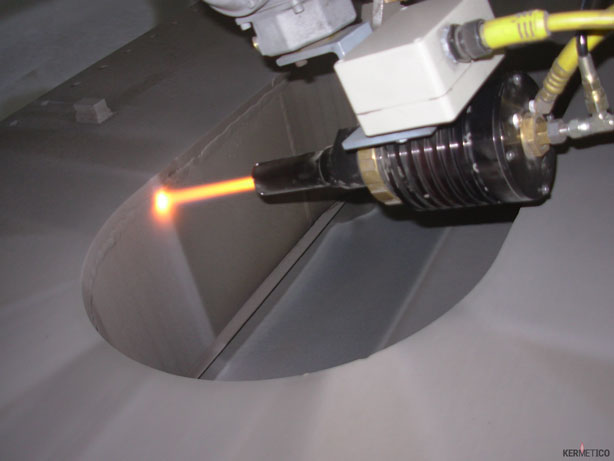
HVAF Repair of Pump Impeller Hubs and Housings
In high-temperature pumps, the impeller hubs and housing wear rings are subjected to erosion and cavitation attack. The Stellite-type plasma transferred arc weld overlays are commonly specified in these areas. Our HVAF Stellite 6- type coatings are successfully used for repairs over the overlays. The HVAF-sprayed WC-10Co-4Cr coating on the impeller hubs coupled with the Stellite-6 type coating on the housing wear ring outperforms weld overlays, specifically in the pumps with tight tolerances of the gap between the impeller and the housing. Also, our HVAF coatings cost only ¼ that of weld overlays.
Coatings Protecting Internal Surfaces of Sleeves, Nozzles, Elbows and Pipes
The Kermetico AK-ID gun deposits high-quality coatings in the harshest environment, spraying internal diameters as small as 3.15 inches (80mm) to a length of 5 feet (1,500 mm) deep. The low power output (just 30 kW) prevents the gun and workpiece from overheating. The efficient design of the gun allows for the effective spraying of tungsten carbide, metals and alloys on internal surfaces.
The Kermetico HVAF AK-ID system is ideal for spraying interior surfaces of pipes, tubes, barrels, and cylinder bores which can be effectively rotated. The gun provides uniform non-permeable wear and corrosion resistant cermet coatings with a spray rate of 5 kg or 11 lbs. per hour, achieving a tungsten carbide coating hardness of 950 HV300 in internal diameters less than 4” and over 1,100 HV300 hardness in 4.0” (100 mm) and larger inner diameters.
Fe-based HVAF Coatings
The Fe-5Ni-28Cr-6Mo-2C HVAF coating (hardness 53-55 HRC) is an effective solution for corrosion and wear problems of valve stems and seats, pump impellers and stainless steel shafts.
Corrosion Protection of a Reflux Distributor
Sometimes it is more efficient to make a new part with a corrosion protective layer than to repair an old one.
A reflux distributor is a good example of such an approach.
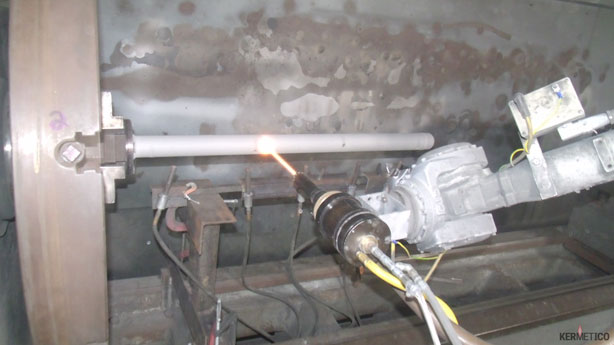
An application of a gas impermeable Hastelloy-type coating entirely mitigates corrosion of the part.
For more information, Click Here.
Polish LPG Bottles Protected by Metallisation Equipment
Automated zinc spraying of gas cylinders (LPG cylinders) is made possible with automatic arc spray systems.
This can be onto brand new cylinders or on reclaimed/repaired cylinders. The zinc coating is applied to give longer corrosion protection to cylinders compared to paints alone. The paint or powder coating layers are often damaged during manual handling and the zinc coating beneath provides a sacrificial coating.
Reason for use: Long term corrosion protection of LPG Bottles.
Vitkovice Milmet S.A. is the only manufacturer of LPG bottles in Poland and has recently purchased three Metallisation Arc spray automatic production metal spraying systems. The steel cylinders, which are mainly used for Propane and Butane gas, are produced from scratch at the company’s site in Sosnowiec and, as with all steel items, are prone to long term damage by corrosion.
Vitkovice Milmet has purchased the metal spraying equipment in response to demands from the LPG cylinder industry for more superior and reliable resistance to corrosion. To provide the level of corrosion protection required, each bottle needs to be metal sprayed prior to powder coating or wet painting. Metal sprayed bottles will be fit for useable service for between 10 and 15 years before routine inspection is required. Metal spraying is a technology that protects or extends the life of a wide variety of products in the most hostile environments.
Normally, LPG bottles are simply coated with either wet paint or a powder coat, which are both liable to damage through normal wear and tear, leaving the metal exposed and leading to corrosion. As an effective protection from corrosion, Vitkovice Milmet has been considering metal spraying for some time and began investigation into this nearly ten years ago, before the demands of the industry were evident.
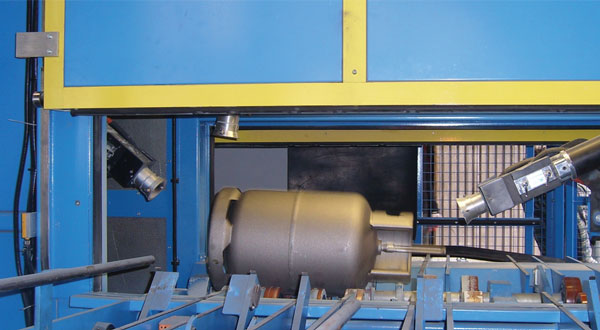
In 2007, the Vitkovice Milmet management team visited Metallisation in the UK to see first hand how metal spraying can protect LPG bottles from corrosion. The team also visited a number of bottle spraying plants across Europe and Scandinavia to witness the effectiveness of metal spraying gas cylinders. While in the UK, the Vitkovice Milmet team also visited leading automation company, EMS Surface Technology Ltd (EMS), based in Reading, to evaluate the equipment that would enable the metal spraying process to be fully automated.
Following extensive evaluation and discussion Vitkovice Milmet chose Metallisation to provide all of the metal spraying equipment, and EMS as the main contractor and supplier of the automation. Vitkovice Milmet’s decision to opt for Metallisation was based on the professional approach of the team in the UK, recent references for the same application and the local support service provided by established Metallisation distributor, Sciteex.
Vitkovice Milmet’s initial brief to Metallisation and EMS was to metal spray the cylinders while in a vertical position. This, unfortunately, can create a range of technical problems and can increase the cost of the automation as well as producing an uneven coating. Following lengthy discussions, Metallisation and EMS were able to demonstrate the benefits of spraying the bottles in a horizontal position, which Vitkovice Milmet agreed to and adopted the principle.
Vitkovice Milmet’s target production is to spray 2,100 of the 11.3kg bottles per day across three shifts. The adaptable automation in conjunction with the Metallisation automatic Arc Spray systems can spray a range of bottle sizes between 3kg to 33kg in weight, between 320mm and 1330mm in length and a diameter range of between 215mm and 375mm.
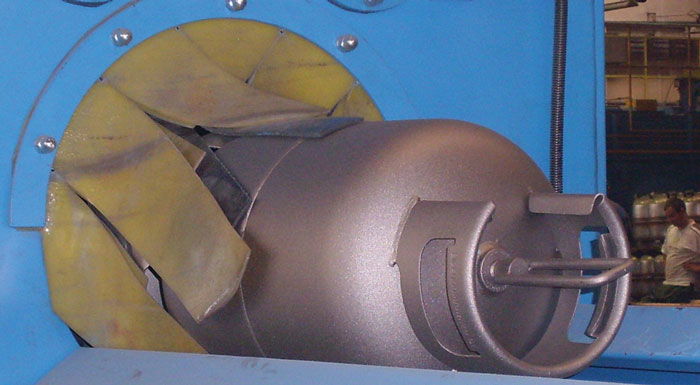
Vitkovice Milmet make the bottles by first pressing the parts which are then welded together with the fixtures, before pressure testing them prior to applying a surface coating. The surface of the bottles needs to be prepared to ensure an adequate profile is created for metal spray adhesion. This is done by grit blasting the bottles in an automatic blasting machine, which produces a blast cleanliness of SA 2.5. Once the surface has been prepared, the metal spraying can begin.
The bottles are automatically fed into the metal spray machine, which aligns the pistols and rotates each bottle. One metal spray pistol moves across the base and sprays the bottom of the bottle, a second, fixed pistol, sprays the bottle neck and shroud and a third pistol traverses along the length of the bottle to coat the sides. The machine is also supplied with dust extraction and dry filtration equipment, to ensure there is no contamination of the coating and to provide a safe working environment.
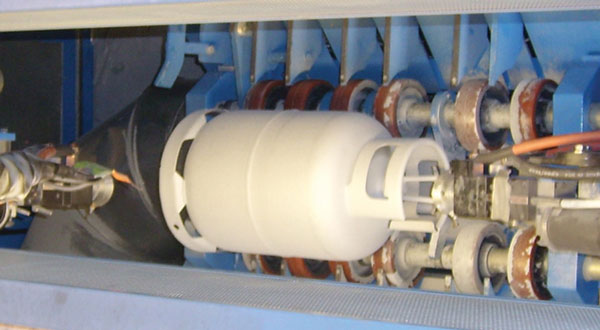
Each bottle is coated with an average of 60 microns of zinc. The base of the bottles is coated with a slightly thicker coating to provide greater protection in an area normally subjected to greater wear and tear. Once all the bottles have been metal sprayed, Vitkovice Milmet then powder coat the bottles to meet its customer colour requirements. Bottles are then fitted with valves, pressure tested, certified and stamped and finally branded with the customers branding using screen-printing.
Vitkovice Milmet chose the Metallisation Automatic Arc Spray System as it provides a consistently high quality zinc coating and can spray zinc at a rate of up to 46kg per hour. The Arc 528E pistols, used to spray the base of the bottles, are connected to two S250, 250 amp energisers. The pistol spraying the sides of the bottles is connected to an S450, 450-amp energiser, as this needs to spray at a higher spray rate than for the base and neck. The zinc is supplied in 250g fibre drum production packs.
Refinery Dock Cranes Hydraulic Rods Hard Chrome Replacement
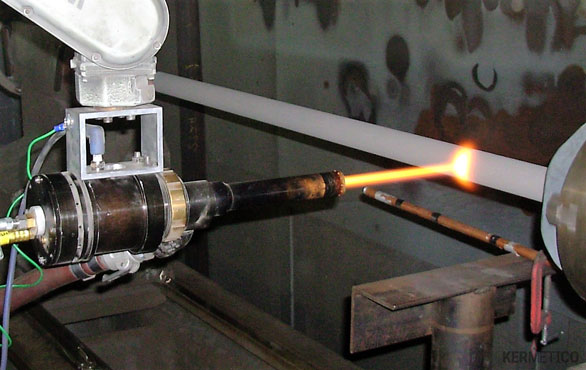
Thermal spray applications that can be completed with Kermetico HVAF technology cannot be accomplished as well with traditional thermal spray processes. One particular area is the replacement of hard chrome plating on hydraulic rods.
Traditional coatings and hydraulics have never worked long enough. Even with a sealer, the porosity eventually allows the hydraulic fluid under pressure to penetrate the coating. Once the pressurized fluid hits the substrate, it spreads out under the coating and lifts it off.
Kermetico coated about 30 hydraulic rods used at a local refinery on their dock cranes. They had been getting only six months out of the chrome plated rods. Kermetico coated them with HVAF WCCoCr 86-10-4. The first ones that were sprayed have been in service for over five years. A report of a visual inspection about six months ago was, “They still pretty much look like they did when we first put them in.”
Thermal Sprayed Aluminium
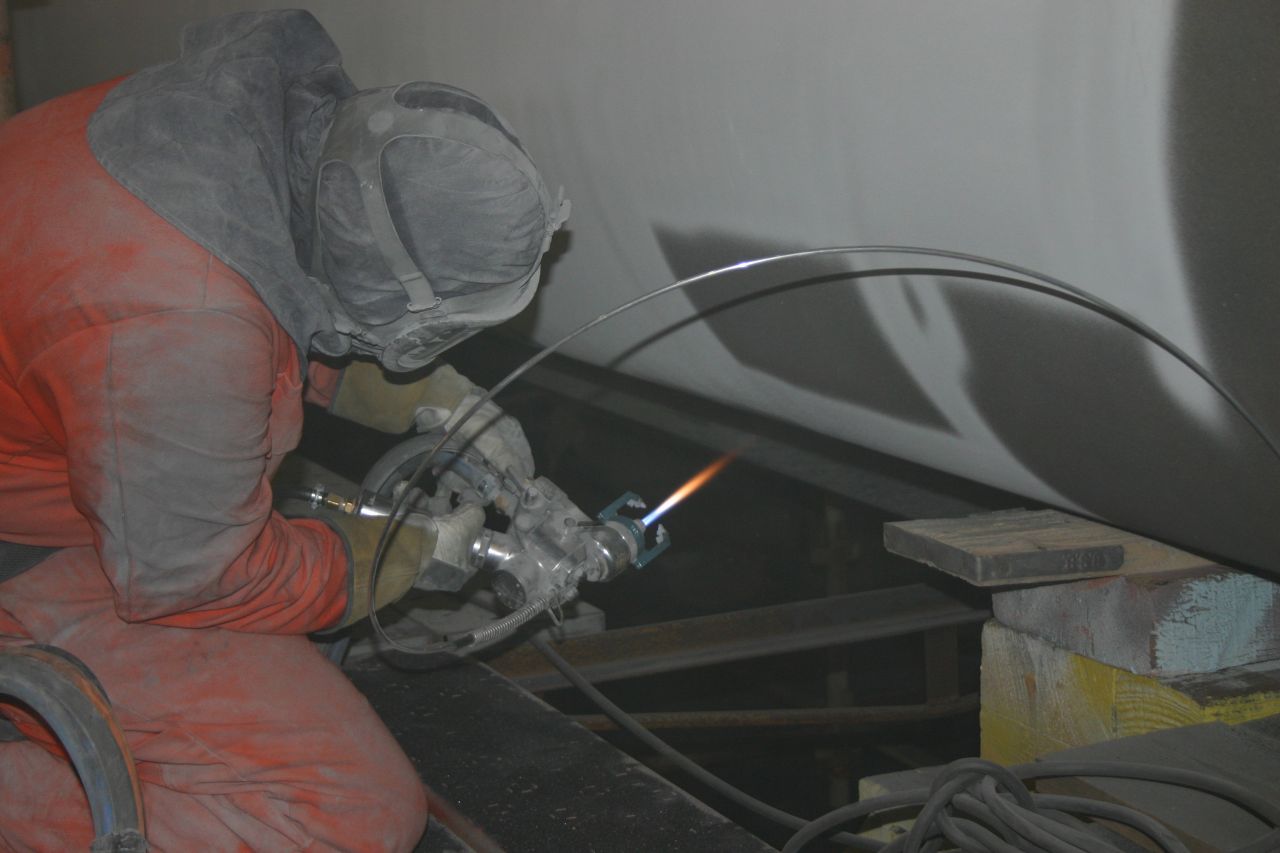
Thermal sprayed aluminium (TSA) coatings are widely specified in the oil and gas industry for the protection of steels from the aqueous corrosion in its typically seawater environment e.g. offshore structures, risers, pipe components and ship structures. The basic properties of a TSA coating for long-term service are its barrier characteristics combined with good adhesion and its ability to provide cathodic protection to the exposed steel.
Barrier
A freshly grit blasted surface (Min SA 2.5) prior to the coating ensures the correct preparation for the TSA. Thicker coatings provide longer life. A common coating thickness for TSA is approx. .015 inches/0.38 mm.
Cathodic Protection
As well as being a barrier coating, the pure aluminium metal in the TSA Corrosion Protection System, when coupled with metals like steel (or those lower on the galvanic scale), will act as a sacrificial anode in a subsea environment.
These characteristics make the long service life of TSA coatings a superb low maintenance requirement and the perfect choice for offshore applications. Typically a 200µm thickness TSA coating would provide service life to first maintenance >20 years.
ERW Pipe
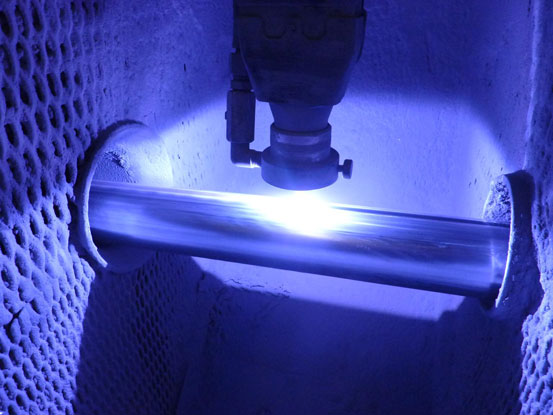
Electric resistance welding (ERW Pipe) is used to transport oil, natural gas and other vapor and liquid objects, which can meet various requirements of high and low pressure, and currently occupies a pivotal position in the field of transportation pipes in the world and of course thermal spray has its part to play.
The electric resistance welding pipe is manufactured by cold forming a piece of galvanised steel strip into a cylindrical shape, and then using an electric current to heat the strip/tube for welding. Unfortunately the welding heat will destroy the protective coating around the localised weld area leaving it vulnerable for corrosion if left untreated. After the process a scraping device used to remove the molten excess welding material on the outside of the weld leaving the surface ready for Thermal spray.
The re-protection of this weld damage is achieved by applying a metal sprayed deposit with a material which affords similar corrosion resistant properties to the strip pre-coat.
This “in-line” method of repair is the only method available which offers the flexibility of producing tube with zinc, aluminium or Zn/Al coatings.
Corrosion Under Insulation
The above video shows an example of using Flame Spray as a solution in the Petrochemical industry. CUI (Corrosion Under Insulation) is a major concern for Asset Managers as the corrosion eats through the piping unseen to the human eye, as it is covered by insulating material, the results of which can be major damage. Long term accelerated corrosion caused by wet insulation occurs between -4oC and +150oC. Corrosion rates are variable but can be as much as 1mm per year.
Flame Spray TSA used on an offshore platform
Metallisation MK73 flame spray systems being used to apply thermal spray aluminium (TSA) to an offshore oil platform for corrosion prevention. The platform is destined for the North Sea. Long supplies packages (30m) were used to enable sprayers to move easily around the structure and increase productivity. Flame spray TSA onto offshore oil platform with Metallisation MK73 systems, the area of TSA was approximately 1,000m2 to 250-400 microns. The system allowed 30m of supplied from gas the flexibility to spray areas of 27m of long main column tubulars.
HVAF System Coating Internal Diameter of Cyclone
The above video shows a Kermetico HVAF System providing an internal diameter tungsten carbide coating on a cyclone. The same process is also used on vessels, pipes, tubes, etc.
Amine Treatment Vessel – Sulphur Dew Point Corrosion Protection
The above video shows a HVAF System applying a thermal spray corrosion resistant coating inside an Amine treatment vessel in order to protect it from Sulphur Dew Point Corrosion.
For more information on Metal Spray equipment or consumables, call us on 07 3823 1004, or email us via our Contact Form.